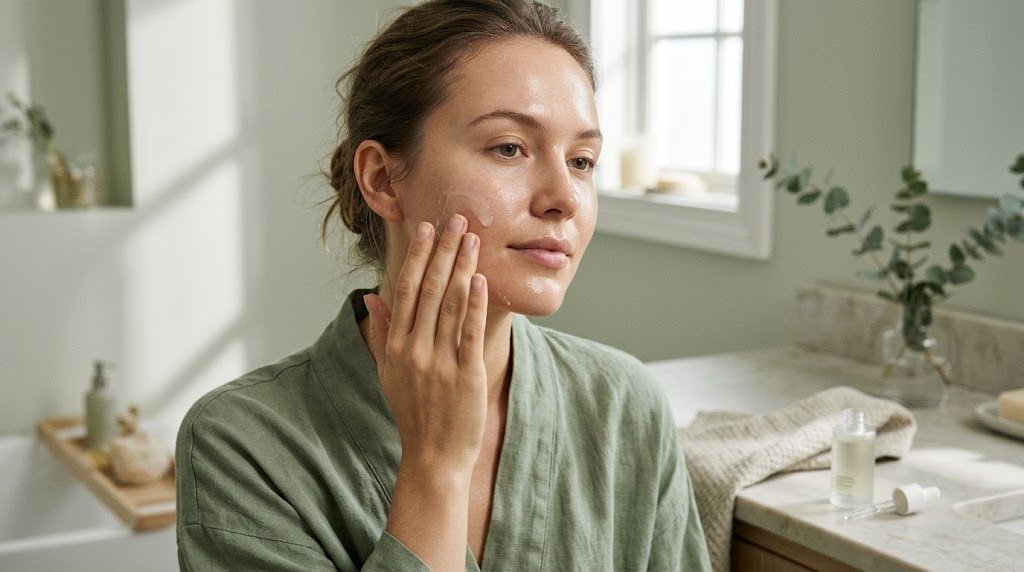
Oily Skin: How to Control Excess Oil Without Drying Your Skin
If your forehead becomes shiny before lunchtime or your face feels greasy even after washing, it is tempting to reach for the strongest cleanser you can find.
But managing oily skin is not about removing every trace of oil. Your skin needs some natural oil, and an overly aggressive routine can leave it irritated, tight, and still shiny.
A better approach is to remove excess surface oil gently, keep your skin comfortable, and choose products that suit your everyday needs.
This guide explains why oily skin happens, how to recognize it, and how to build a simple routine without turning oil control into a battle against your skin.
A quick reminder: This article is educational. Oily skin is a skin type, not a diagnosis. Persistent irritation, painful breakouts, or sudden unexplained changes deserve professional advice.
What Is Oily Skin?
Oily skin describes a tendency to produce relatively abundant sebum, the natural oil made by sebaceous glands.
Sebum is not dirt. It helps lubricate and protect the skin. When more of it reaches the surface, however, your face may look shiny or feel greasy.
The aim of skincare is therefore not to eliminate sebum completely. It is to manage excess oil while preserving comfort and moisture.
Some people naturally have more active sebaceous glands than others. Genetics, hormones, age, and environmental conditions can all influence oiliness.[1]
Oily Skin Does Not Automatically Mean Acne
Oily skin and acne can occur together, but they are not the same thing.
You can have oily skin without frequent breakouts. Likewise, people who do not have an oily skin type can still experience acne.
This matters because a routine for everyday shine does not necessarily need acne-treatment ingredients.
Common Signs of Oily Skin
Look for a repeated pattern across ordinary days, rather than judging your skin immediately after exercise or applying a glossy product.
Common clues include:
- Shine that develops across several areas of the face.
- A greasy feeling on the forehead, nose, chin, and sometimes cheeks.
- Noticeable oil transfer onto blotting paper.
- Makeup becoming shiny or moving around during the day.
- Some pores appearing more noticeable.
- Recurring blackheads or blemishes, although these are not required.
Practical example: You cleanse gently in the morning and use lightweight products. By midday, your forehead and cheeks both feel oily. If this happens consistently, it supports an oily-skin pattern.
Check What Is Causing the Shine
Not every shiny face is an oily face.
Sweat, sunscreen, makeup, and rich moisturizer can all create surface shine. Consider what you applied and whether you have been exercising or spending time in hot weather.
Pore size alone is also not a reliable skin-type test. Look at oil distribution, comfort, and your usual daily pattern together.
Why Do Some People Naturally Produce More Oil?
Oily skin is not evidence that you are washing incorrectly or failing to care for yourself.
Genetics
Your tendency toward oiliness can run in families. You may inherit sebaceous glands that are relatively active.
Hormones and Life Stages
Hormones influence sebaceous gland activity. Oiliness commonly becomes more noticeable during puberty, and it can fluctuate at other stages of life.
These changes do not mean every episode of oily skin signals a hormonal disorder.
Age
Skin often changes with age. Someone who has very oily skin as a teenager may find that it becomes less oily later, although this is not a fixed timeline for everyone.
Environment
Warm, humid conditions can make oiliness more noticeable. Your baseline skin type and your current environment both contribute to how your face behaves.[1]
The practical takeaway: Skincare can help manage oiliness, but it does not need to permanently change your natural skin type to be useful.
Oily Skin vs. Combination Skin
The key difference is usually where oiliness occurs.
| Feature | Oily skin | Combination skin |
|---|---|---|
| Typical oil distribution | Several facial regions, often including the cheeks | Mainly the T-zone, with less oily cheeks |
| Cheek behavior | Often oily too | May feel balanced or dry |
| Product needs | Lightweight textures may suit much of the face | Different areas may need different amounts of moisturizer |
| Useful observation | Does most of my face become greasy? | Do oily and dry areas consistently coexist? |
The T-zone includes the forehead, nose, and chin. An oily T-zone with dry or balanced cheeks is a common combination-skin pattern.[2]
A Practical Example
If your nose becomes shiny but your cheeks regularly feel tight, treating your entire face with a strong oil-control routine may make the cheeks uncomfortable.
You might instead use one gentle cleanser throughout and adjust moisturizer by area.
Do not force a label if your pattern is unclear. Observing your skin for several ordinary days is more useful than repeatedly changing products.
How to Build a Simple Routine for Oily Skin
Start with three essentials:
- A gentle cleanser
- A comfortable moisturizer
- Broad-spectrum sunscreen with SPF 30 or higher
A toner, exfoliating serum, clay mask, and separate treatment product are optional—not compulsory.
Beginner-Friendly Routine at a Glance
| Morning | Evening |
|---|---|
| Gentle cleanser | Remove makeup if needed, then cleanse gently |
| Lightweight moisturizer, as needed | Lightweight moisturizer |
| Broad-spectrum SPF 30 or higher | Optional targeted treatment only if there is a reason to use one |
Establish these basics before adding multiple active ingredients. A routine that keeps your skin comfortable is a better foundation than one that makes it temporarily matte but persistently irritated.
Morning Routine for Oily Skin
Step 1: Cleanse Gently
Use a mild facial cleanser with lukewarm water. Apply it with your fingertips rather than a brush or abrasive cloth.
A gentle foaming cleanser can be a comfortable choice for oily skin, but foam alone does not tell you whether a product is suitable.
Your face should feel clean—not sore, stripped, or unusually tight.
Step 2: Apply a Lightweight Moisturizer
Choose a lotion, gel, or gel-cream that feels comfortable under sunscreen.
Oily skin can still need moisture. The American Academy of Dermatology recommends moisturizing after cleansing even when skin is oily.[3]
If your sunscreen already provides enough moisturizing comfort, you may not need a separate moisturizer underneath it. Judge this by how your skin feels, not by a rule that every morning must contain the same number of layers.
Step 3: Apply Sunscreen
Use a broad-spectrum sunscreen with SPF 30 or higher.
Look for a texture you can apply generously without discomfort. Fluid, gel, and lightweight lotion formats may suit oily skin, but preferences vary.
Do not reduce the amount simply to avoid shine. If the finish bothers you, try a different formulation.
Evening Routine for Oily Skin
Step 1: Remove Makeup When Needed
Long-wear makeup may need a separate removal step. Use a product that removes it without repeated rubbing.
Double cleansing is not automatically necessary. If one gentle cleanser adequately removes your sunscreen and makeup, an extra step may add little benefit.
An oil-based remover is not automatically unsuitable because your skin is oily. The complete formula, how it rinses, and your individual response matter.
Step 2: Cleanse Gently
Wash away the day’s oil, sweat, sunscreen, and buildup using lukewarm water.
Avoid leaving a rinse-off cleanser on longer than directed in the hope that it will control more oil.
Step 3: Moisturize
Apply a comfortable moisturizer after cleansing.
If your face feels both greasy and tight, do not automatically add a stronger cleanser. Consider whether your current routine is irritating or overly drying.
Step 4: Add a Targeted Product Only If Needed
If blackheads or acne are also a concern, an appropriate treatment may be useful. But oiliness by itself does not require an acne routine.
Introduce one new product at a time, follow its directions, and seek advice when treatment choices are unclear.
Cleansing: Remove Excess Oil Without Stripping Your Skin
How Often Should You Wash?
Dermatology guidance generally recommends washing up to twice daily and after heavy sweating.
Repeated washing throughout the day just because you notice shine is usually unnecessary.[4]
Practical example: If your face becomes shiny at work, use blotting paper rather than washing again and again. After a sweaty workout, a gentle cleanse makes more sense.
What Should You Look for in a Cleanser?
Useful starting points include:
- A mild, non-abrasive formula.
- A texture that rinses comfortably.
- No persistent stinging or burning.
- No strong tightness after use.
- Fragrance-free options if you are prone to reactions.
“For oily skin” is a marketing category, not a guarantee of gentleness.
Does Your Face Need to Feel Squeaky-Clean?
No. That sensation is not proof of a better cleanse.
If you repeatedly finish washing with tight, uncomfortable skin, reconsider the product, water temperature, or technique.
Why Over-Cleansing Can Be Counterproductive
Over-cleansing can remove surface lipids and add irritation without changing the underlying reasons your sebaceous glands are active.
You may then end up with:
- A tight feeling immediately after washing.
- Flaking around the mouth or cheeks.
- Stinging when you apply moisturizer.
- Continued shine alongside discomfort.
Harsh cleansing and scrubbing are discouraged in dermatology guidance for oily skin because they can irritate it.[3]
Be Careful With “Rebound Oil” Explanations
You may hear that stripping the skin always forces it to produce much more oil. That should not be treated as a universal explanation for every person’s oiliness.
The more dependable reason to avoid over-cleansing is straightforward: irritation is not effective oil management, and repeatedly removing surface oil does not address your natural skin-type tendency.
Similarly, moisturizer should not be presented as a guaranteed way to switch off oil production. Its main role is to help maintain moisture and comfort.
Moisturizing Oily Skin Without a Heavy Finish
Choose a Texture You Enjoy Using
Lightweight lotions, gels, and gel-creams are reasonable starting points.
A moisturizer does not need to feel rich or leave a visible coating to be useful. Equally, the lightest product is not automatically the best if your skin remains uncomfortable.
Understand “Oil-Free” and “Non-Comedogenic”
These labels can help narrow your choices:
- Oil-free: Indicates that the formulation is made without certain oil ingredients.
- Non-comedogenic: Indicates that the product is intended to be less likely to clog pores.
Neither label guarantees that a product will suit every person.
A product can also feel shiny without clogging pores, or feel matte while still irritating your skin.
Oily Skin Can Still Be Dehydrated
Oil and water are different parts of the skin’s moisture balance. Skin can produce plenty of oil while lacking sufficient water in its outer layers.[5]
If you are oily and uncomfortable, look at the whole routine before assuming you need more oil-control products.
Sunscreen Considerations for Oily Skin
Find a Comfortable Finish
Terms such as “lightweight,” “fluid,” or “matte finish” may help you find a texture you prefer. However, an extremely drying finish is not a requirement.
Different mineral and chemical sunscreen formulations can suit oily skin. Personal tolerance and the overall formula matter more than assuming one category is always best.
Maintain Adequate Protection
Choose broad-spectrum SPF 30 or higher. Use water resistance when appropriate for swimming or sweating.
During outdoor exposure, reapply at least every two hours and after swimming or sweating, following the product’s directions. Use shade and protective clothing too.[6]
Do Not Abandon Sunscreen Because One Product Feels Greasy
Try a different texture instead. You may also be able to reduce unnecessary layers underneath it, provided your skin stays comfortable.
The goal is a sunscreen routine you can maintain—not perfect all-day mattness.
Ingredients Commonly Used in Oily-Skin Products
You do not need to collect all of these ingredients. Choose products according to your actual concerns.
Salicylic Acid
Salicylic acid is commonly included in products for clogged pores and acne. It can help unclog pores, making it relevant when oiliness occurs alongside blackheads or blemishes.
It can also cause dryness or irritation. Using it in a cleanser, toner, and serum simultaneously is not necessarily more effective or more tolerable.[7]
For beginners, follow the product directions and avoid introducing several exfoliating products together.
Niacinamide
Niacinamide is a form of vitamin B3 used in many skincare formulas. It may help with oil regulation and support the skin barrier, but it is not an instant or guaranteed solution to shine.[8]
A separate high-strength serum is not essential. Your moisturizer may already contain it.
Glycerin and Hyaluronic Acid
These are humectants—ingredients that help attract and retain water in the skin’s outer layer.
They appear in lightweight moisturizers as well as richer ones. Hydrating ingredients are not reserved for dry skin.[9]
Exfoliating Acids
Glycolic and lactic acids appear in some oily-skin products, but they can be irritating, particularly when overused.
You do not need daily exfoliation simply because your face becomes shiny.
Acne-Treatment Ingredients
Benzoyl peroxide and retinoids may be relevant when acne is also present. They are not interchangeable with a basic shine-control product, and they can cause dryness or irritation.[7]
If you have persistent acne, ask a dermatologist or pharmacist about appropriate options. If you are pregnant, trying to conceive, or breastfeeding, check with a clinician before starting treatment actives.
Practical Ways to Manage Shine During the Day
Blot Instead of Rubbing
Gently press blotting paper onto oily areas for a few seconds. Avoid rubbing it across your face.
This removes some surface oil without another full cleanse.[3]
Check Your Product Layers
If your face looks very glossy immediately after your routine, consider whether several rich layers are contributing.
Simplifying unnecessary layers may improve comfort, but do not underapply sunscreen.
Keep Expectations Realistic
Some shine is normal. You do not need to blot every few minutes or maintain a powder-dry finish to have a sensible skincare routine.
How Weather and Environment Affect Oily Skin
Hot, Humid Weather
Warm conditions can make oiliness more noticeable, while sweat adds another source of shine.
You may prefer lighter product textures, but increasing cleanser strength is not automatically necessary.
Cold Weather and Dry Indoor Air
Oily skin can still become uncomfortable in cold or dry conditions. You may need a slightly more moisturizing texture while keeping your cleanser gentle.
Seasonal dryness does not necessarily mean your underlying skin type has changed.
Exercise and Sweating
Wash gently after heavy sweating when practical. Avoid scrubbing or using several strong cleansing products.
A Useful Seasonal Approach
Keep the basic routine consistent and adjust only what needs changing.
For example, you might use the same mild cleanser throughout the year, choose a lighter moisturizer in humid weather, and use a more comfortable cream when indoor air is dry.
Common Mistakes People With Oily Skin Make
Washing Every Time Shine Appears
Shine is not a signal that your face needs repeated cleansing.
Skipping Moisturizer Automatically
Choose an appropriate texture rather than assuming oily skin never needs moisture.
Using Strong Astringents
A temporarily dry finish does not necessarily mean a product is helping your skin.
Scrubbing or Using Rough Cleansing Tools
Friction can add irritation without solving oil production.
Introducing Several Active Ingredients Together
This makes it difficult to identify what is helping and what is causing discomfort.
Treating Every Visible Pore as a Problem
Pores are normal structures. Products may affect their appearance, but they do not need to disappear.
Mistaking Burning for Effectiveness
Persistent stinging, peeling, or burning is a reason to reassess—not proof that an oil-control product is working.
Expecting Products to Permanently Change Your Skin Type
A useful routine can make oily skin easier to manage without eliminating your natural tendency toward oiliness.
When to Consult a Dermatologist
Oily skin alone is usually not a medical problem. Still, you can seek help if it is difficult to manage or affecting your confidence.
Professional advice is especially useful when you have:
- Painful, persistent, or scarring acne.
- Repeated irritation or reactions.
- Burning, itching, or peeling despite simplifying your routine.
- A sudden, sustained change in oiliness, especially with other new symptoms.
- Difficulty finding even basic products your skin tolerates.
- Concerns about choosing treatment ingredients.
You do not need to exhaust every over-the-counter product before asking for advice. A dermatologist can help distinguish everyday oiliness from other concerns and recommend an appropriate approach.[1]
The Bottom Line
The most useful oily-skin routine is usually not the strongest one.
Cleanse gently, moisturize according to your needs, use sunscreen, and add targeted ingredients only when there is a clear reason. Manage midday shine with blotting rather than repeated washing.
Aim for comfortable, manageable skin—not the complete absence of natural oil.
Frequently Asked Questions
1. Does Oily Skin Need Moisturizer?
Yes, oily skin can still need moisture. A lightweight lotion or gel is a useful starting point. If your sunscreen already provides enough moisturizing comfort, you may not need a separate morning layer.
2. How Often Should I Wash My Oily Face?
Generally, up to twice daily and after heavy sweating. Avoid repeatedly washing just to remove midday shine, especially if your skin becomes tight or irritated.
3. Why Does My Skin Feel Tight but Still Look Oily?
Oiliness can coexist with dehydration or irritation. Consider your cleanser, exfoliation habits, and other products rather than automatically adding stronger oil-control steps.
4. Is Salicylic Acid Necessary for Oily Skin?
No. It may be useful when clogged pores or acne are also concerns, but ordinary oiliness does not require it. A simple cleanser, moisturizer, and sunscreen routine is a reasonable starting point.
5. Can I Have Oily Skin Without Acne?
Yes. Oily skin describes an oil-production tendency; acne is a separate concern. Do not assume you need acne treatments solely because your face becomes shiny.
6. Will Oily Skin Go Away Permanently?
Oiliness may change with age, hormones, and environment, but skincare cannot promise to permanently change your skin type. The goal is practical management rather than a permanent cure.
7. What Is the Easiest Way to Reduce Midday Shine?
Gently press blotting paper onto oily areas without rubbing. If shine is mainly caused by your products, review unnecessary layers or try lighter textures while maintaining adequate sunscreen protection.