Sensitive Skin: How to Build a Gentle Skincare Routine
When your skin reacts easily, skincare can feel like a guessing game. A cleanser leaves your face tight, a new serum stings, or a fragranced moisturizer causes discomfort—even though someone else loves it.
The answer is not necessarily to find a product with the longest list of “soothing” ingredients. Often, a more useful starting point is to simplify your routine, reduce avoidable irritation, and introduce changes carefully.
This guide explains what sensitive skin means, how sensitivity differs from an allergic reaction, and how to build a straightforward routine around cleansing, moisturizing, and sun protection.
Important: This article is educational, not a diagnosis. Persistent or severe symptoms should be assessed by a qualified healthcare professional.
What Does Sensitive Skin Mean?
“Sensitive skin” is an everyday term used to describe skin that has reduced tolerance to certain products or environmental conditions. It is not, by itself, a medical diagnosis.
People may experience stinging, burning, itching, or visible changes after using skincare. Sometimes discomfort occurs without an obvious rash.[1]
Sensitivity is also different from your skin’s oil-and-dryness pattern. You can have:
- Dry and sensitive skin.
- Oily and sensitive skin.
- Combination and sensitive skin.
- Generally balanced skin that reacts to particular products.
This distinction matters because sensitive skin does not always need the richest moisturizer. It needs products and habits that suit both its moisture requirements and its tolerance.
Sensitivity Can Be Persistent or Temporary
Some people regularly find that many products cause discomfort. Others notice sensitivity after excessive exfoliation, frequent washing, or a change in weather.
A product reaction does not automatically mean you have permanently sensitive skin. Equally, recurring discomfort should not be dismissed as something you simply have to tolerate.
Common Signs of Sensitive Skin
Possible signs include:
- Stinging or burning after applying certain products.
- Itching or discomfort.
- Tightness, dryness, or flaking.
- Visible changes in skin color.
- Repeated irritation after cleansing or exfoliation.
- Discomfort from heat, cold, or friction.
These symptoms can have different causes. They are not specific enough to identify an allergy or another skin condition at home.[1]
Do Not Rely on Redness Alone
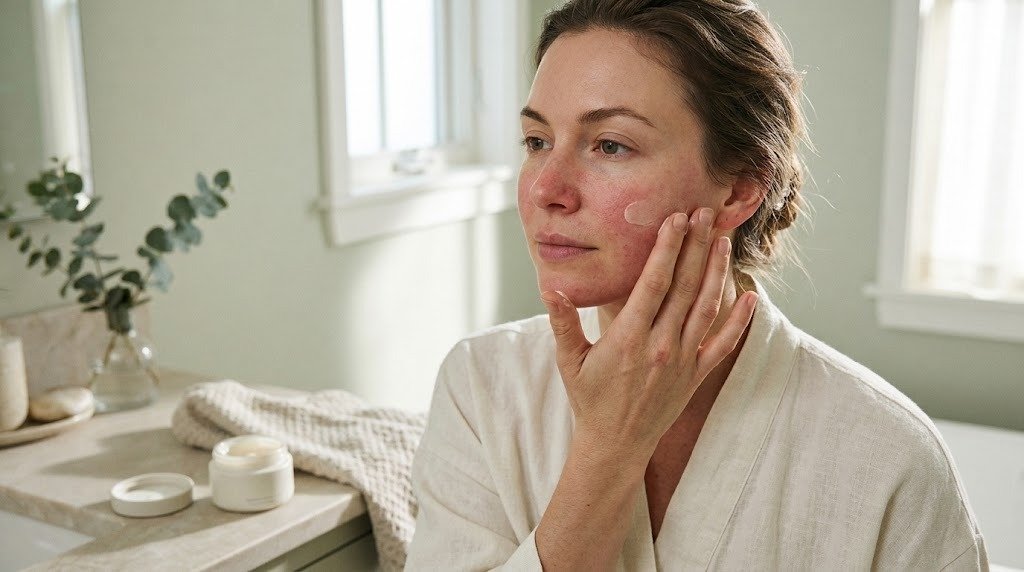
Changes may be easier to see on some skin tones than others. Certain inflammatory reactions can look red on lighter skin and darker brown, purple, or grey on darker skin.
Pay attention to how your skin feels and changes from its usual appearance—not just whether it looks red.[2]
Practical example: A new face wash repeatedly leaves your cheeks burning, but you cannot see much redness. The discomfort still matters.
Common Triggers for Sensitive Skin
Triggers vary between people. An ingredient or habit that bothers one person may be comfortable for another.
Harsh Cleansing
Strong soaps, repeated washing, hot water, and vigorous scrubbing can make skin uncomfortable.
Even a mild cleanser may become irritating if you use it excessively or combine it with rough cleansing tools.
Frequent Exfoliation
Scrubs, exfoliating acids, and repeated peeling treatments can be difficult to tolerate, especially when several are used together.
Retinol and glycolic acid are examples of ingredients that may irritate sensitive skin.[3]
Fragrance and Scented Products
Fragrance can contribute to irritation or allergic reactions in some people. This includes fragrance from essential oils and certain botanical ingredients—not only synthetic perfume.
Friction
Rubbing with towels, cleansing brushes, rough cloths, or repeated makeup-removal passes can add irritation.
Weather and Environmental Conditions
Heat, cold, low humidity, ultraviolet exposure, and sweat can affect skin comfort.[1]
Too Many Changes at Once
A cleanser, toner, serum, and moisturizer introduced together make it difficult to identify what caused a reaction.
Your skin may also tolerate individual products but become uncomfortable when several potentially irritating steps are combined.
Sensitive Skin vs. Allergic Reactions
Sensitivity, irritation, and allergy are related topics, but they are not interchangeable.
Irritation Does Not Require an Allergy
An irritant reaction can occur when a product or repeated exposure affects the skin directly. For example, frequent washing or aggressive exfoliation may leave skin sore without an allergic response.
Allergy Involves an Immune Response
An allergic contact reaction involves an immune response to a particular substance. Some cosmetic ingredients, including fragrances or preservatives, can cause such reactions in susceptible people.
Irritant and allergic reactions can have overlapping symptoms, including itching, dryness, and a rash. They may develop over hours or days, so timing alone is not a reliable way to distinguish them.[2]
You Cannot Reliably Diagnose the Difference at Home
Avoid rules such as:
- “Immediate stinging always means irritation.”
- “An itchy rash always means allergy.”
- “If I used it before, I cannot be allergic to it.”
If reactions are recurring, a clinician can review your history and decide whether further investigation is appropriate.
Seek emergency medical help for symptoms such as difficulty breathing, throat tightness, faintness, or sudden swelling of the lips, tongue, or throat. These are not symptoms to manage by adjusting your skincare routine.
A Simple Beginner Routine for Sensitive Skin
Start with a small number of products you can use comfortably.
| Morning | Evening |
|---|---|
| Gentle cleanse or water rinse, as needed | Gentle cleanse to remove sunscreen, makeup, and buildup |
| Suitable moisturizer | Suitable moisturizer |
| Broad-spectrum SPF 30 or higher | No additional products required |
Soap-free cleansing, non-irritating moisturizers, and sun protection are established starting points in sensitive-skin care.[1]
A toner, facial oil, exfoliant, mask, or separate hydrating serum is optional. You do not need to add them to make the routine complete.
If Your Skin Is Already Irritated
Pause newly introduced, non-essential products and return to a simpler routine using products you previously tolerated.
Do not keep adding “soothing” products in an attempt to fix a reaction. Each new formula introduces another variable.
If even your usual basic products cause significant discomfort, seek advice. Do not change prescribed treatment without discussing it with the prescriber.
Gentle Cleansing for Sensitive Skin
Choose a Mild Formula
Look for a gentle, non-abrasive cleanser. Fragrance-free options are a useful starting point when you are prone to reactions.
A soap-free cleanser may suit sensitive skin, but no label guarantees that every person will tolerate it.
Creamy, gel, and low-foaming cleansers can all be gentle. Texture alone does not tell you how a product will behave.
Use Lukewarm Water and Your Fingertips
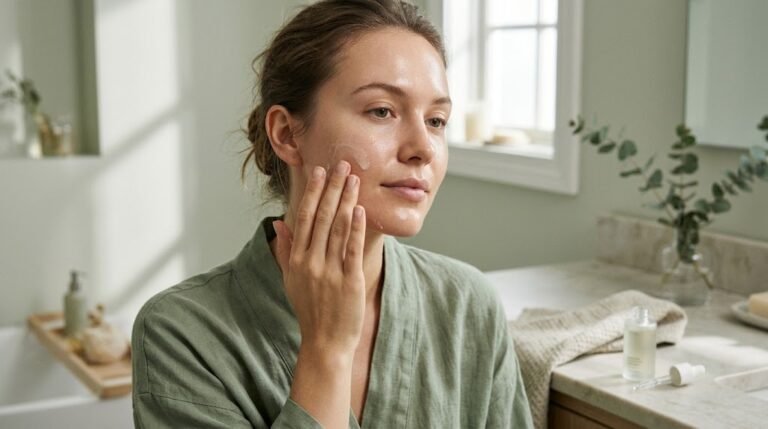
Apply cleanser with clean fingertips, rinse gently, and pat dry with a soft towel.
Avoid scrubbing or using a rough washcloth, sponge, or cleansing brush. Dermatology guidance recommends gentle cleansing techniques because friction can irritate skin.[4]
Cleanse According to Need
Evening cleansing is useful for removing sunscreen, makeup, and the day’s buildup.
In the morning, a water rinse may be enough if your skin feels clean and repeated cleansing makes it uncomfortable. If you need a cleanser, use it gently.
Make Makeup Removal Less Abrasive
If you wear long-lasting makeup, use an appropriate remover rather than repeatedly rubbing with wipes or a cloth.
Double cleansing is not compulsory. If a single gentle cleanser adequately removes your products, another step may be unnecessary.
Moisturizing Sensitive Skin
Choose a Comfortable Texture
Sensitive skin can be oily, dry, or somewhere in between.
- Dry skin may prefer a cream.
- Oilier skin may feel more comfortable with a lightweight lotion or gel-cream.
- Combination skin may need more moisturizer in some areas than others.
The goal is a product that maintains comfort without repeated burning, itching, or unnecessary heaviness.
Apply After Cleansing
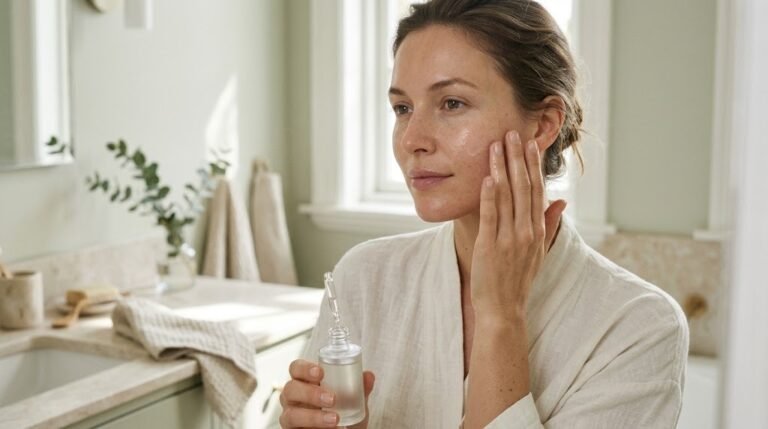
Applying moisturizer soon after washing, while skin is slightly damp, can help retain moisture.
You do not need to repeatedly wet your face or use several hydration layers. A suitable moisturizer may already do enough.
Keep Expectations Realistic
Moisturizers commonly combine ingredients that attract water, soften skin, and reduce water loss. They can support comfort, but they cannot guarantee that an allergic reaction or persistent skin problem will resolve.[5]
If a moisturizer repeatedly causes burning or a rash, do not assume your skin needs to “get used to it.”
Sunscreen for Sensitive Skin
Sensitive skin still needs sun protection.
Choose a sunscreen offering:
- Broad-spectrum protection.
- SPF 30 or higher.
- Water resistance when appropriate, particularly for swimming or sweating.
Mineral Sunscreen Is a Useful Starting Option
Dermatologists commonly recommend mineral sunscreens containing zinc oxide, titanium dioxide, or both for sensitive skin.[6]
However, the complete formulation matters. A mineral sunscreen can still contain an ingredient you react to, and some people comfortably use other sunscreen formulations.
Fragrance-free options may be worth considering.
Maintain Adequate Protection
Do not apply too little sunscreen to avoid an uncomfortable finish. Instead, look for a formulation you can use as directed.
During outdoor exposure, reapply at least every two hours and after swimming or sweating, following the label. Use shade and protective clothing as well.[7]
If you are testing a new sunscreen, continue using a tolerated sunscreen when possible. Do not deliberately leave your skin unprotected while waiting to complete a product test.
How to Introduce New Skincare Products
A slow, controlled approach makes reactions easier to recognize.
Step 1: Identify a Clear Reason to Add It
Ask yourself what the product is meant to do.
If your basic routine already keeps your skin comfortable, another serum is not automatically necessary.
Step 2: Introduce One Product at a Time
Avoid starting several unfamiliar formulas together.
Changing one product at a time gives you a better chance of identifying the cause if discomfort develops.
Step 3: Test a Small Area First
For basic skincare products, small-area testing is a useful precaution. It does not guarantee facial tolerance, but it can help reveal some reactions before wider use.
Step 4: Follow the Instructions
Do not use a product more frequently, leave it on longer, or apply a thicker layer simply to test it.
Active or medicated products may require a different introduction plan. Ask a pharmacist or clinician if you are unsure.
Step 5: Keep a Short Record
Note the product name, when you started it, and any changes.
A simple record such as “itching began two days after new moisturizer” may help a clinician. It does not establish which ingredient caused the reaction.
Patch Testing: Home Product Testing vs. Medical Testing
The term “patch testing” is often used loosely, so it helps to distinguish two different activities.
Home Small-Area Product Testing
The American Academy of Dermatology describes testing a normal amount of a product on a small area, such as the underside of the arm or elbow bend, twice daily for seven to ten days.[8]
For a cautious home approach:
- Choose a small area of intact, non-irritated skin.
- Apply the normal amount.
- Repeat according to the product’s intended use; do not exceed its directions.
- Rinse off rinse-off products as directed.
- Watch for itching, swelling, burning, or visible changes.
- Stop and gently wash the product off if a reaction develops.
Do not tape or seal a product against your skin unless a healthcare professional instructs you to.
Do not deliberately retest a known allergen or a product that previously caused a serious reaction.
What a Home Test Cannot Tell You
A reaction-free test does not guarantee that:
- Your face will tolerate the product.
- You will never react later.
- You are not allergic to an ingredient.
- The product will be comfortable when combined with the rest of your routine.
Facial skin, especially around the eyes, may react differently from the arm.[1]
Medical Patch Testing
Medical patch testing is performed and interpreted by healthcare professionals to investigate certain contact allergies.
It uses selected substances and scheduled assessments. It is not the same as applying your moisturizer to your arm at home, and it does not diagnose every type of allergic reaction.[9]
If you repeatedly react to products, a dermatologist can decide whether this testing is appropriate.
Ingredients People With Sensitive Skin May Prefer
There is no universal ingredient list that suits everyone. The overall formulation and your individual tolerance matter.
Still, familiar moisturizing ingredients can be useful starting points:
| Ingredient | Common role in skincare |
|---|---|
| Glycerin | Helps attract and retain water |
| Hyaluronic acid | Used for hydration |
| Ceramides | Lipids used in moisture-barrier-focused formulas |
| Dimethicone | Helps soften skin and reduce water loss |
| Petrolatum | Provides a protective layer that limits moisture loss |
These ingredients are commonly used in moisturizing products, but none makes a formula automatically reaction-proof.[10][11]
Do Not Chase the Shortest Ingredient List
A shorter list may be easier to review, but it is not automatically safer. A short formula can contain an ingredient you react to, while a longer formula may suit you well.
Preservatives also serve an important purpose in many products by limiting microbial contamination. Some people have specific preservative allergies, but that does not mean everyone should avoid all preservatives.
Fragrance and Irritation Considerations
Fragrance-Free Is Different From Unscented
An unscented product may contain ingredients that mask the smell of other components. Fragrance-free is generally a more useful starting label if fragrance is a concern.[8]
Essential Oils Are Not Automatically Gentler
A plant-derived scent can still cause irritation or allergy.
“Natural,” “clean,” and “botanical” should not be treated as guarantees that a product is suitable for reactive skin.
Be Cautious With Marketing Claims
“For sensitive skin,” “hypoallergenic,” and “dermatologist tested” do not guarantee that a product will suit you personally.
Use labels to narrow your options, then pay attention to your own response.
How Weather Can Affect Sensitive Skin
Cold, Dry Conditions
Cold weather and low humidity can increase dryness and discomfort. You may benefit from a richer moisturizer or more frequent application.
A humidifier may help when indoor air is dry, but clean it regularly according to its instructions.
Heat and Sweat
Heat and sweat can be uncomfortable for some people. Cleanse gently after heavy sweating when practical, rather than scrubbing.
Avoid assuming that every heat-related reaction is harmless sensitivity if symptoms are persistent or pronounced.
Wind and Sun Exposure
Wind can add discomfort, while ultraviolet exposure can affect sensitive skin. Suitable moisturizer, sun protection, and protective clothing may help reduce avoidable exposure.[1]
You do not need a completely new routine each season. Adjust texture and frequency before replacing everything.
Common Mistakes With Sensitive Skin
Treating Burning as Proof a Product Is Working
You do not need to endure significant or persistent burning to get skincare benefits.
Introducing Several Products Together
This makes troubleshooting difficult and can increase the overall irritation burden.
Exfoliating Dry or Uncomfortable Skin
Flaking does not automatically mean you need a scrub or stronger acid.
Using Hot Water
Lukewarm water is a gentler starting point.
Adding More Products During a Reaction
A collection of calming serums can introduce more potential triggers. Simplification is often more useful.
Assuming Natural Products Cannot Cause Reactions
Origin does not determine tolerance.
Blaming One Ingredient Without Evidence
A reaction to a multi-ingredient product does not prove which component caused it.
Self-Treating a Persistent Rash
Avoid repeatedly applying medicated creams without advice, especially around the eyes or when the cause is unclear.
When Professional Advice Is Appropriate
Consult a healthcare professional if you have:
- Persistent or recurring irritation.
- A rash that does not settle.
- Significant swelling, blistering, cracking, or pain.
- Itching that disrupts sleep.
- Repeated reactions despite a simplified routine.
- Discomfort around the eyes.
- Difficulty tolerating basic cleanser, moisturizer, or sunscreen.
- Symptoms that appear to be related to prescribed treatment.
Professional assessment is recommended for persistent, recurrent, or severe skin reactions. A clinician can investigate possible causes and recommend appropriate next steps.[2]
Do not wait for a routine experiment to finish if symptoms are severe or rapidly worsening.
The Bottom Line
A gentle routine is not about finding a product that promises never to cause a reaction. It is about reducing unnecessary irritation and making changes carefully.
Start with a mild cleanser, a suitable moisturizer, and sunscreen you can tolerate. Keep optional products optional, test new formulas cautiously, and seek advice when discomfort is persistent.
Your skin does not need to sting, peel, or burn for skincare to be worthwhile.
Frequently Asked Questions
1. Is Sensitive Skin a Skin Type or a Medical Condition?
“Sensitive skin” is an everyday description, not a diagnosis. It can occur alongside dry, oily, combination, or balanced skin. Persistent symptoms may need assessment to understand their cause.
2. Does Stinging Mean I Am Allergic to a Product?
Not necessarily. Stinging can occur with irritation, and allergic reactions can have overlapping symptoms. You cannot reliably distinguish them from one symptom alone.
3. Should I Choose Fragrance-Free Products?
Fragrance-free products are a useful starting point if you react easily or suspect fragrance is a trigger. They still need to be assessed for your individual tolerance.
4. How Long Should I Test a New Product?
The American Academy of Dermatology describes small-area testing over seven to ten days. Follow the product’s directions and stop if a reaction develops. Home testing cannot guarantee that your face will tolerate it.
5. Is Mineral Sunscreen Better for Sensitive Skin?
Mineral sunscreen containing zinc oxide or titanium dioxide is commonly recommended as a starting option. However, the whole formula matters, and no sunscreen category is guaranteed to suit everyone.
6. Can I Use Exfoliants or Retinol With Sensitive Skin?
Some people tolerate them, while others find them irritating. They are not essential beginner steps. Establish comfortable basic care first, and seek advice if you need treatment ingredients or have recurring reactions.
7. When Should I See a Dermatologist?
Seek advice for persistent or repeated reactions, a recurring rash, significant itching, swelling, pain, or difficulty tolerating basic skincare. Get emergency help for breathing difficulty or sudden swelling of the lips, tongue, or throat.